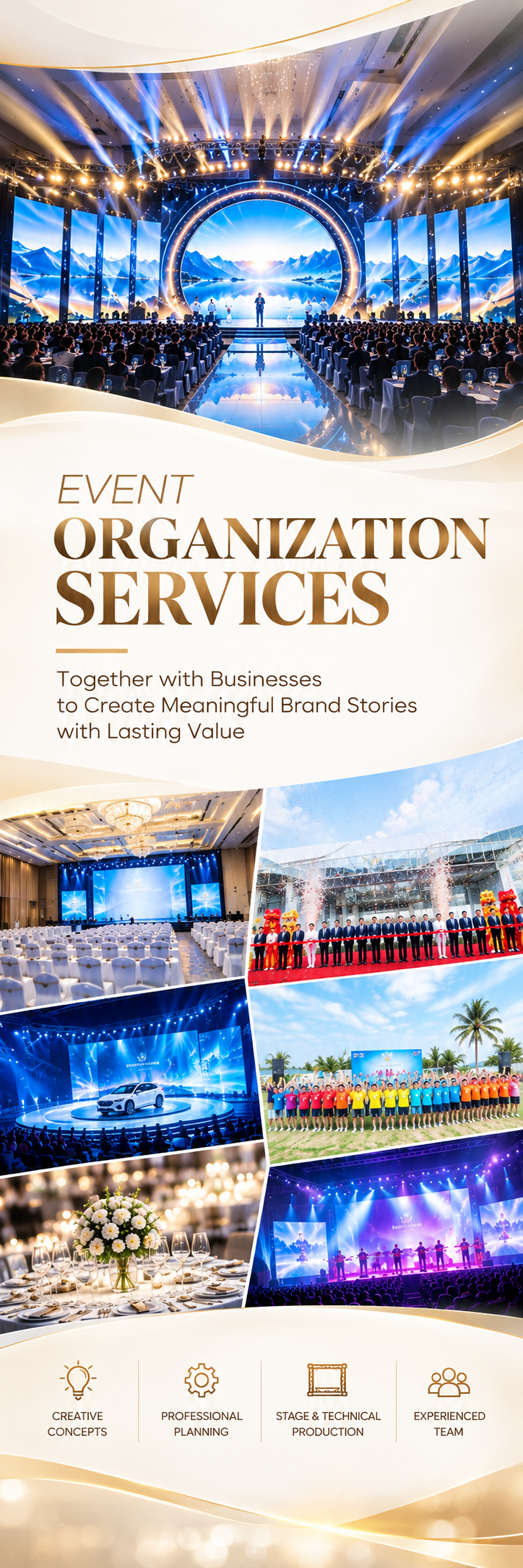

Full service corporate event organization
Full service event management for businesses: What does it include and how much does it cost?
A corporate event does not fail because the stage is not beautiful enough. It fails when a company spends heavily on multiple elements without having a clear understanding of what the event is ultimately expected to achieve.
Are you planning:
-
A customer conference?
-
A product launch?
-
A grand opening?
-
A factory inauguration?
-
A seminar?
-
A kick-off event?
-
An activation?
-
A Year-End Party?
-
A major event to mark an important brand milestone?
If the answer is yes, the first question should not be: “How much will the stage cost?”
It should be: “What value should this event create for the business?”
That is also how Phoenix approaches every event project.


1. What does full service event management really include?
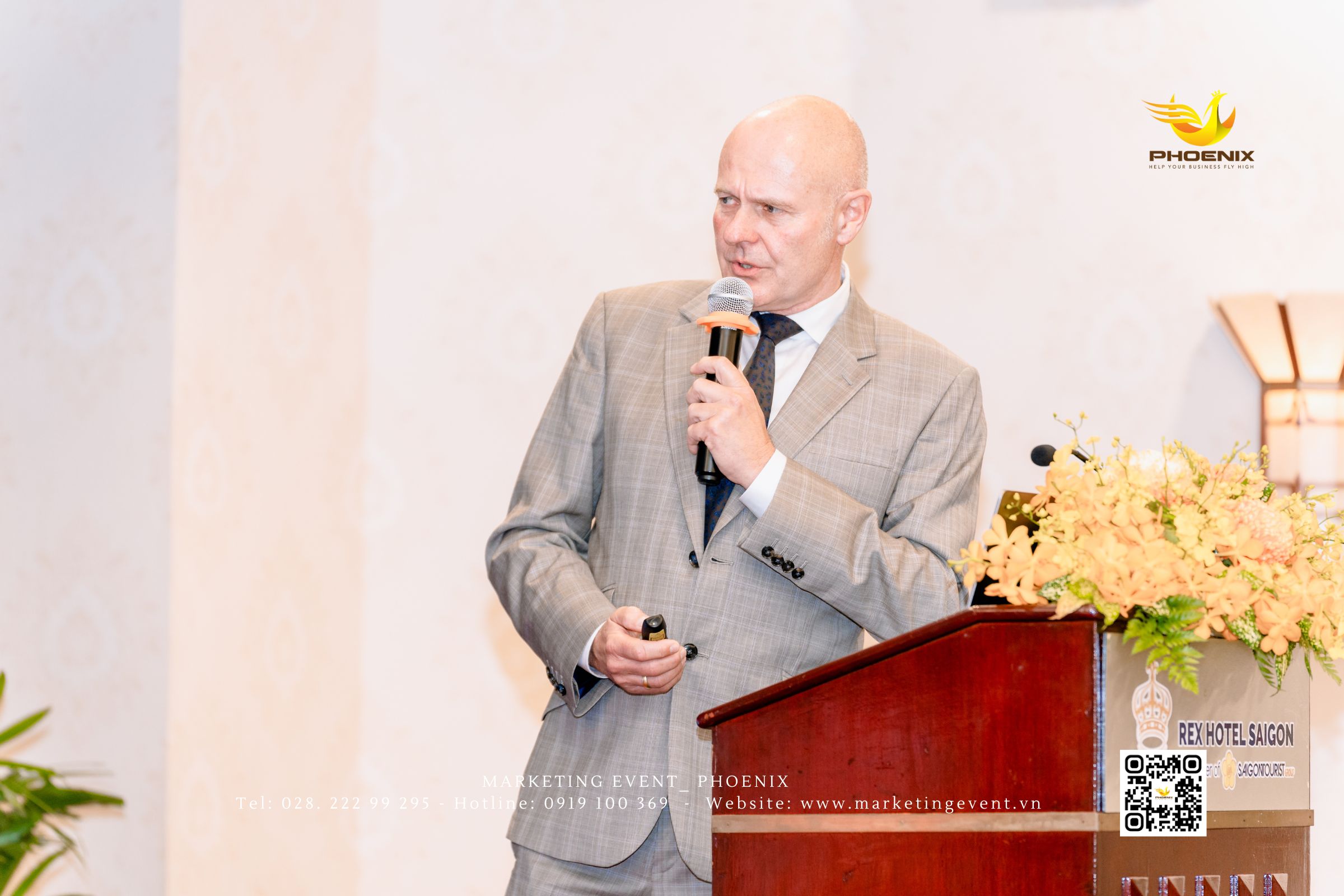
Many businesses understand “full-service event management” simply as hiring an agency to take care of the stage, sound system, lighting, MC and event staff. But a professional corporate event requires much more than that.
1.1 Understanding the Event Objectives
Before thinking about the concept, it is essential to define:
-
Who is the event for?
-
What is the business objective?
-
What is the communication objective?
-
What is the most important message?
-
What should guests remember after the event?
-
What action does the business want guests to take after the event?
A product launch requires a completely different approach from a customer conference. Likewise, a factory inauguration cannot be planned with the same mindset as a sales activation.
A good event starts with objectives, not equipment.
2. Concept & big idea: The soul of an event
Once the objectives have been established, Phoenix develops:
-
Big Idea
-
Concept
-
Key Message
-
Theme
-
Mood & Tone
-
Visual Direction
-
Event Storyline
This is what determines whether an event becomes a meaningful brand experience or simply a program with a series of activities and performances.
For example:
Product Launch → Create attention and product recall.
Customer Conference → Strengthen relationships and build trust.
Anniversary Event → Tell the brand story and celebrate its journey.
Factory Inauguration → Demonstrate the company's scale, capabilities and long-term vision.
Activation → Create interaction and drive action.
They may all fall under the category of “events”, but the business challenges behind them are completely different.


3. Event script & production
A visually impressive proposal does not automatically create a successful event. The real challenge is turning an idea on paper into an experience that works in the real world. Phoenix develops and manages:
-
Overall event script
-
Timeline
-
Run of Show
-
MC script
-
Director's script
-
Event cues
-
Presentation content
-
Video production
-
Visual content
-
Artistic performances
-
Stage management
-
Full rehearsal
The objective is simple: make sure the idea works not only on paper, but also on site.

4. Stage & event space design
A professional event requires a consistent visual identity across the entire venue. This may include:
-
Stage design
-
LED screens
-
LED Matrix
-
Backdrop
-
Photobooth
-
Exhibition or experience booths
-
Check-in area
-
VIP area
-
Experience zones
-
POSM
-
Wayfinding
-
Event branding system
For large-scale events, the stage is not simply about looking impressive. It needs to serve the: Message + Experience + Camera Angles + Lighting + Content + Brand
Every visual element should contribute to the overall event experience.
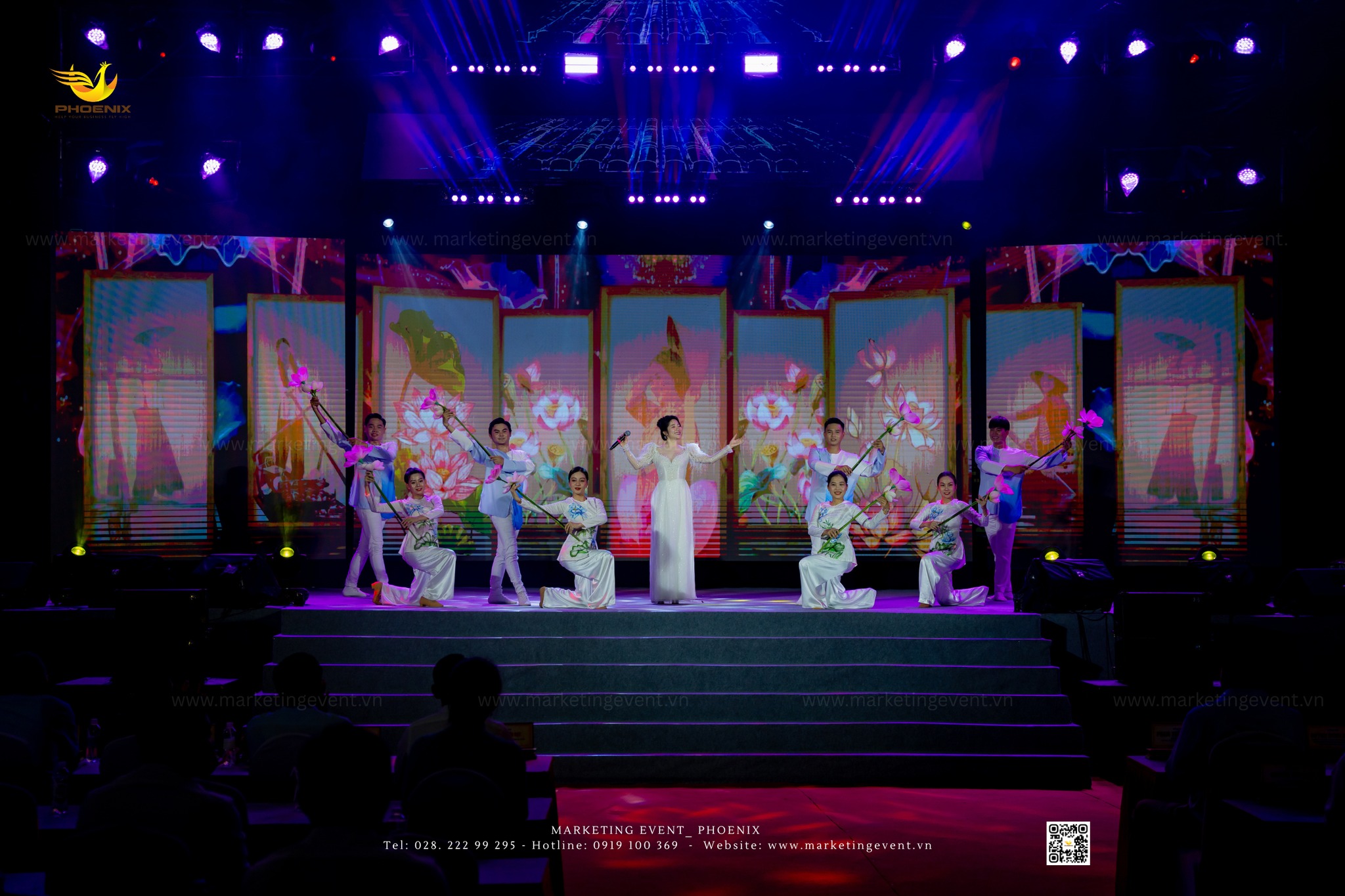
5. Sound, lighting, LED, technology
Production is one of the areas where event budgets can easily increase if there is no professional control from the beginning. Depending on the scale and objectives of the event, production may include:
-
Sound system
-
Lighting
-
LED screens
-
LED Matrix
-
Moving Heads
-
Follow Spots
-
Stage technology
-
Projection systems
-
Livestreaming
-
Automated check-in
-
Interactive LED
-
Hologram
-
Interactive technologies
Not every event needs to invest in every technology. A good event agency should know which elements deserve greater investment and which can be reduced without compromising the guest experience.
6. Event operations & staffing
An event may look perfect on paper and still fail because of poor execution. Depending on the event, the operational team may include:
-
Event Director
-
Project Manager
-
Stage Manager
-
Producer
-
MC
-
Receptionists
-
Promotional Staff
-
Technical Crew
-
Photographer
-
Videographer
-
Livestream Team
-
Guest Coordination Team
-
Security
-
Backstage Team
For events involving VIPs, business partners, major clients or senior executives, guest coordination must be planned well before event day.
7. Communication before – during – after the event
This is one area where Phoenix takes a different approach from traditional event production.
An event should not begin when guests walk into the venue.
It should begin long before that.
Before the Event
-
Save the Date
-
Invitations
-
Social Content
-
PR
-
Teasers
-
Video
-
Landing Page
-
Registration
-
Email/SMS
-
Seeding
During the Event
-
Livestreaming
-
Photography
-
Videography
-
Social Content
-
Real-time Content
-
Interviews
-
KOL/KOC activation where appropriate
After the Event
-
Highlight Video
-
Photo Album
-
Event Recap
-
PR
-
Social Content
-
Case Study
-
Customer Follow-up
This is where Event becomes Marketing.
8. What determines the cost of organizing an event?
There is no fixed price that applies to every event. The budget primarily depends on several factors.
1. Type of event
Seminars, customer conferences, grand openings, product launches, activations and gala dinners all have different cost structures.
2. Number of guests
An event for 50 guests is completely different from one for 300, 500 or 1,000 guests.
3. Venue
Hotels, convention centers, factories, showrooms and outdoor venues all require different production solutions.
4. Level of visual investment
The more distinctive the concept and the more sophisticated the design, the greater the potential investment in creative development and production.
5. Content & Entertainment
MCs, singers, bands, KOLs/KOCs, speakers and performers can all create significantly different budget levels.
6. Production Requirements
LED, sound, lighting, staging, projection mapping and interactive technology all affect the overall budget.
7. Communication Objectives
An internal event for invited guests is fundamentally different from an event designed to generate broad media exposure.
So instead of simply asking: “How much will this event cost?”
Ask: “What experience and business impact can we create with this budget?”

9. How can businesses avoid unexpected event costs?
This is one of the most important issues businesses should consider. Before signing a contract, ask the agency to clearly define:
Scope of work
Which deliverables and services are included?
Production
How are the stage, LED, sound and lighting costs calculated?
Creative
How many revision rounds are included for the concept, key visual, video and motion graphics?
Artists
Are the fees for artists, MCs and KOLs/KOCs included?
Venue
Who is responsible for venue-related costs such as electricity, overtime, security and cleaning?
Media
Are PR, social media, livestreaming and filming included in the proposal?
Contingency
How will additional requests, changes or unexpected requirements be handled? A good proposal does more than tell a business how much it will spend. It tells the business what it is actually spending money on.
10. How does Phoenix approach event management?
Phoenix does not approach events simply as a production exercise.
We combine:
EVENT + MARKETING + BRANDING + CREATIVE + PRODUCTION
Starting from a business objective, Phoenix develops the project through:
Business Objective
↓
Event Strategy
↓
Big Idea
↓
Creative Concept
↓
Event Experience
↓
Production
↓
Communication
↓
Measurement
The goal is not simply to make sure the event runs smoothly. The bigger objective is to make the event contribute to stronger brand recall, deeper customer connections and wider communication impact.
11. When should a business hire an event agency?
Businesses should consider working with an event agency when:
-
The event involves a large number of guests or VIPs.
-
The program requires multiple production components.
-
The company does not have an experienced in-house event team.
-
A distinctive concept is required.
-
Budget control is important.
-
Event needs to be integrated with Marketing and PR.
-
The event has a direct impact on the brand's image.
-
The internal team does not want to manage dozens of suppliers themselves.
Most importantly, when an event is strategically important to the brand, do not simply choose an agency that “can execute an event.”
Choose a partner that understands what the business is trying to achieve through the event.
12. Phoenix – Event Marketing partner for businesses
Phoenix provides event solutions for a wide range of formats, including:
-
Customer Conferences
-
Seminars
-
Product Launches
-
Grand Openings
-
Factory Inaugurations
-
Groundbreaking & Commencement Ceremonies
-
Activations
-
Kick-off Events
-
Year-End Parties
-
Gala Dinners
-
MICE
-
Exhibitions
-
Corporate Events
More importantly, Phoenix does not simply ask: “What type of event does your company want to organize?”
We want to understand: “What do you want this event to achieve?”
Only then can the right solution be developed.

Are you planning an event?
Don't start by asking five to seven suppliers for price quotations.
Start with your objectives, audience, budget and key message.
Phoenix can work with your business from the beginning to develop the concept, proposal, budget and execution plan.
Send your event brief to Phoenix to receive a tailored proposal.
Contact Phoenix:
Phone / Zalo: 0919 100 369 / 0906 925 088
PHOENIX MARKETING EVENT
Help Your Business Fly High.